In addition to being able to visit a variety of restaurants and sampling global foods in each country through the tasting experience we were also provided the opportunity to work with chefs in each country to learn how to make a specialty from that area. Again the focus wagon using simple natural ingredients and taking time and pride in the creations we were making. This is another great example of how the slow food movement is alive in these countries. Fostering a culture of home cooking and traditional food preparation is what we were shown in these three different chef experiences. My own reflection from these opportunities is when you focus on the food preparation and take pride in that you also focus on the enjoyment of eating the food that was prepared in a much greater way. The stories that go with the preparation, the history of the recipes and the handing down of the traditions from generation to generation are also great attributes of the slow food movement. Below are three of my favorite chef cooking classes from the trip.
Gnocchi, Italy
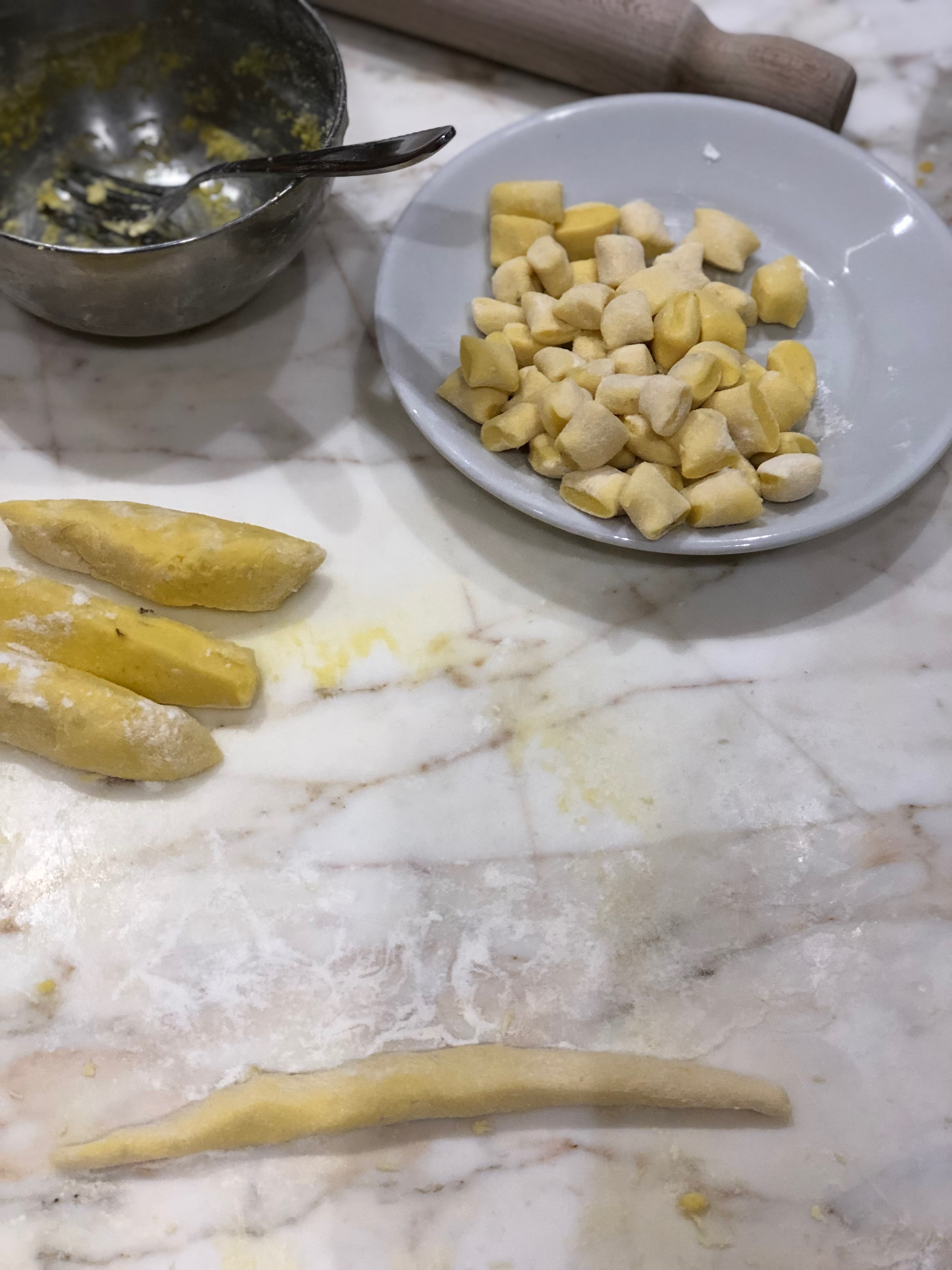
Gnocchi is a pillow shaped pasta made from potato. It only consists of three ingredients; flour, potato, and eggs. Most of the flavor comes from the sauce that you choose to put on it. In order to prevent if falling apart in the water it needs to be rested in olive oil. We cooked the pasta and used tomato sauce as a topping. Gnocchi is typically served as a first or main course as a traditional pasta would be served but it can also be served as a side dish to another main like a protein. Gnocchi are served with butter and sage, or can be served with a traditional marinara sauce or a variety of other sauces, so there are many variations you can experience in restaurants. The recipe that the Italian chef taught us had the following ingredients:
flour to prep table, then mixed together 300 grams potato,1 egg yolk, pinch of salt, 1200 grams of flour. the ingredients are mixed together then worked on a wooden table or cutting board. Roll out the dough then cut into small pieces about the size of a small square. You can press with a fork to make indentations in the dough dumping. The indentations once cooked helped the Gnocchi hold sauce. The dough is boiled in water until cooked. Gnocchi are served with butter and sage, or can be served with a traditional marinara sauce or a variety of other sauces, so there are many variations you can experience in restaurants. You can also add to the dough and include ricotta, spinach and other fillings. So while a very traditional dish there are many variations possible that allow for unique interpretations of the traditional recipe. While typically pasta is not my favorite go to entree, Gnocchi is different and my go to order when we are dining Italian. It’s very simple nature, dense and filling pasta, and variations of sauces appeal to me. Now with my 1st hand experience with preparing Gnocchi I will make it at home as well. It provides a recipe that can be made with common household ingredients, that can involve the family and encourage a meal of slow eating and a full dining experience from preparation to eating. Having this at home and then eating with my family is a great way to celebrate the slow food movement.
Croissants, France
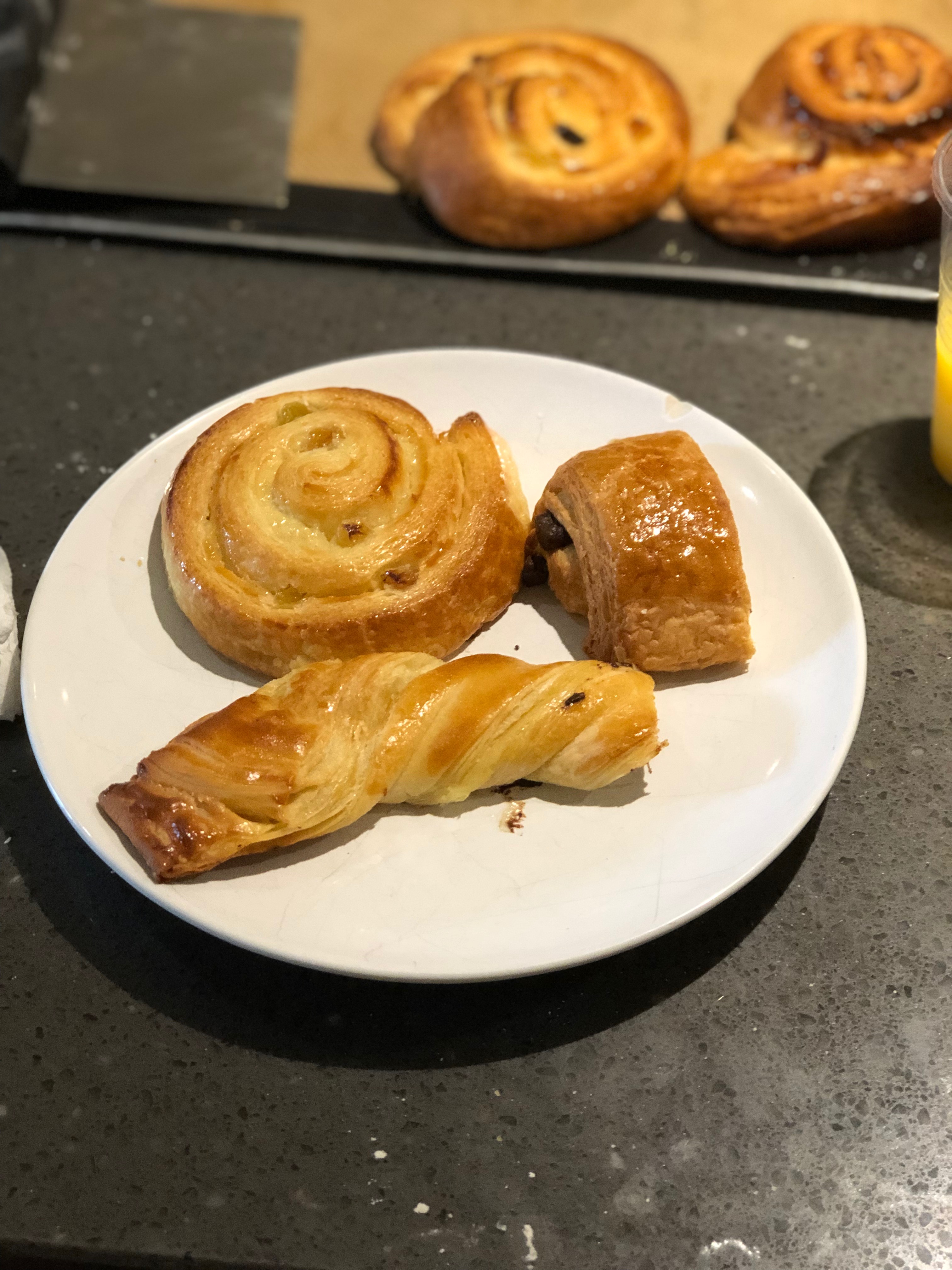
Another chef taught cooking class we attended was in France. We made many variants of croissants. The dough for all of the variants was the same. When making the dough we had to knead the consistently to activate its elasticity. It has to be refrigerated and allowed to sit for hours. Then we take butter and shape it into a rectangle and allow it to cool in the fridge. We then shaped the dough into a similar shape but thicker version of the butter, and then the dough and butter are folded together and allow it to rest to prevent the butter from melting. We then shaped the croissants into their final shape and allowed them to prove for 2-3 hours at room temperature before baking them. The process to make a croissant is very methodical and requires patience, timing and focus. This is something that once the dough is made the final product depending on shape, fillings, toppings can be one of multiple formats. The effort in making the croissants leads to an even better reward when they are done and can be enjoyed. Whether you make them for yourself or buy them from a French bakery, they are complex in taste and texture but simple in ingredients. Even watching people eat croissants is a process, pulling apart the flaky layers and enjoying the experience of eating the croissant. It is definitely a slow food experience and supporting the slow food movement making or even just purchasing and eating a freshly made croissant. I was unable to capture the recipe for the croissants we made but have the ingredients and understand the process. there are also many traditional croissant recipes available on line for reference. I look forward to sharing the experience of making croissants with my family and retelling the story of our time with the chef in France.
Chemistry Explanation: Croissants have a unique layered texture that is visible when the croissant is cut in two pieces. The layers are formed from two reactions. The first isa he butter that is layered between levels of dough. Once in the heat of the oven the butter melts but forms a layer to keep the layers of dough separate which forms air pockets within the croissant. The other is the yeast which creates carbon dioxide which form gas bubbles that expand in the heat further defining the distance between the layers. These two chemical effects are what result in the flaky layered center with distinct air pockets.
Butter Chicken, London
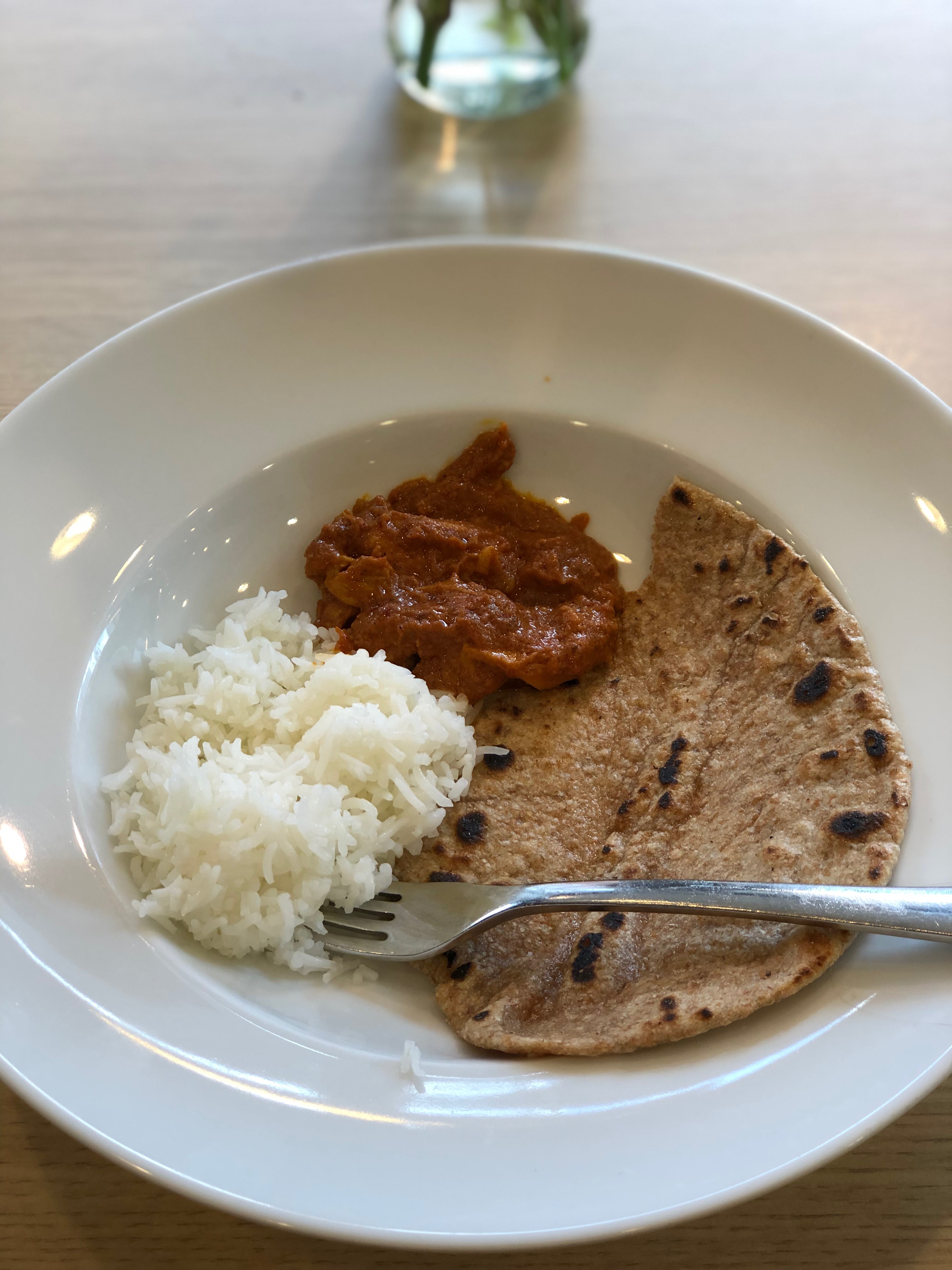
Butter Chicken is an Indian dish made from Chicken and accompanied by a spiced tomato gravy. It is traditionally served with naan bread and basmati rice. During my trip we learned to make this dish while in London. Butter Chicken or Indian cuisine may not be what you think of when you think of English food. You may immediately think of Fish and Chips, however in London the cuisine is very diverse with restaurants supporting food from all over the world and Indian food is one type of food that is commonly found in London and enjoyed by the English. The main ingredients in Butter Chicken are
Chicken, Butter, Yogurt, Spice, Green chillies, and Coriander
It can be made quite spicy although for our American palates the spice was not made too spicy as we are not used to eating spicy curries. It is a very enjoyable dish with the creamy sauce really highlighting the chicken. The naan bread and rice are served with the chicken and used to dip in the rice and gravy.
The preparation fo food from another culture , learning about the different types of food and how to prepare it helped me to understand more about the foods we eat and to appreciate another culture. It also again supports the slow food movement highlighting how food preparation can be part o the meal experience and how much tase comes from using very simple ingredients to create bold flavors. In the US even in the midwest where I live we are seeing more opportunities to try global foods including Indian traditional foods. Experiencing this either self made or in a restaurant you can enjoy the tasting of the different foods, talk about the experience and learn to appreciate another culture and appreciate the food.
 Cooking With Chemistry